TORONTO — Inspired in part by the homeowner's extensive bright, bold, colorful art collection, Picnic Design set out to instill key design elements throughout the Wallace Emerson area home. In the process, a 1920s Toronto house with a rear extension in urgent need of structural rebuilding was transformed into a visually bold, unified, and functionally comfortable home.
In the early stages of planning for the project, the client’s extensive collection of modern and other artworks became the north star. The aim was to create a cohesive space by connecting design ‘zones’ on the ground floor using unifying elements, while maintaining a sense of playfulness and levity, and referencing the intersecting lines found in modern art.
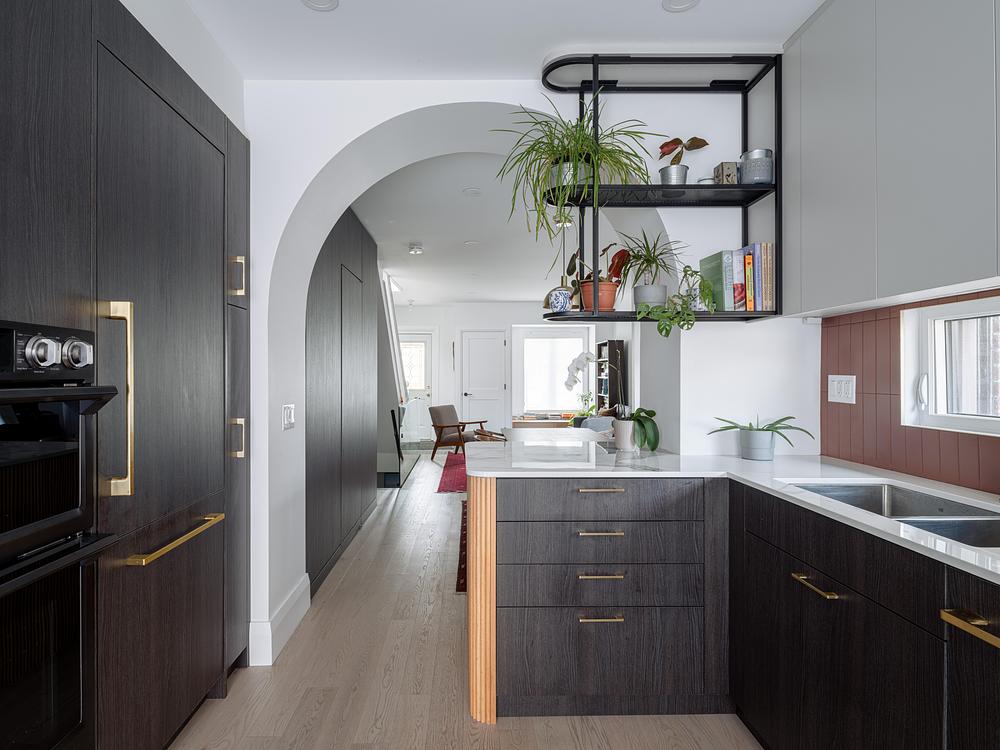
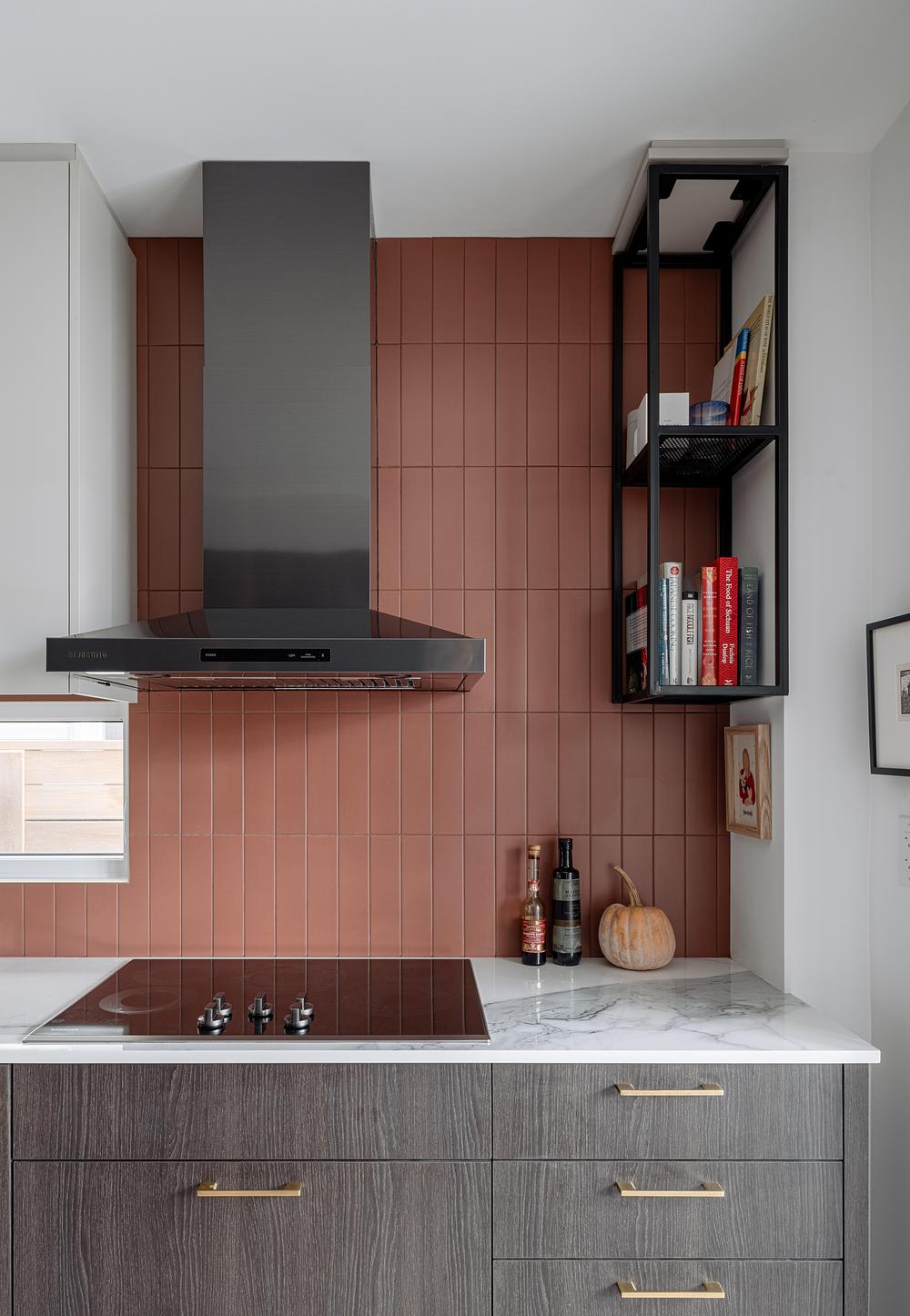
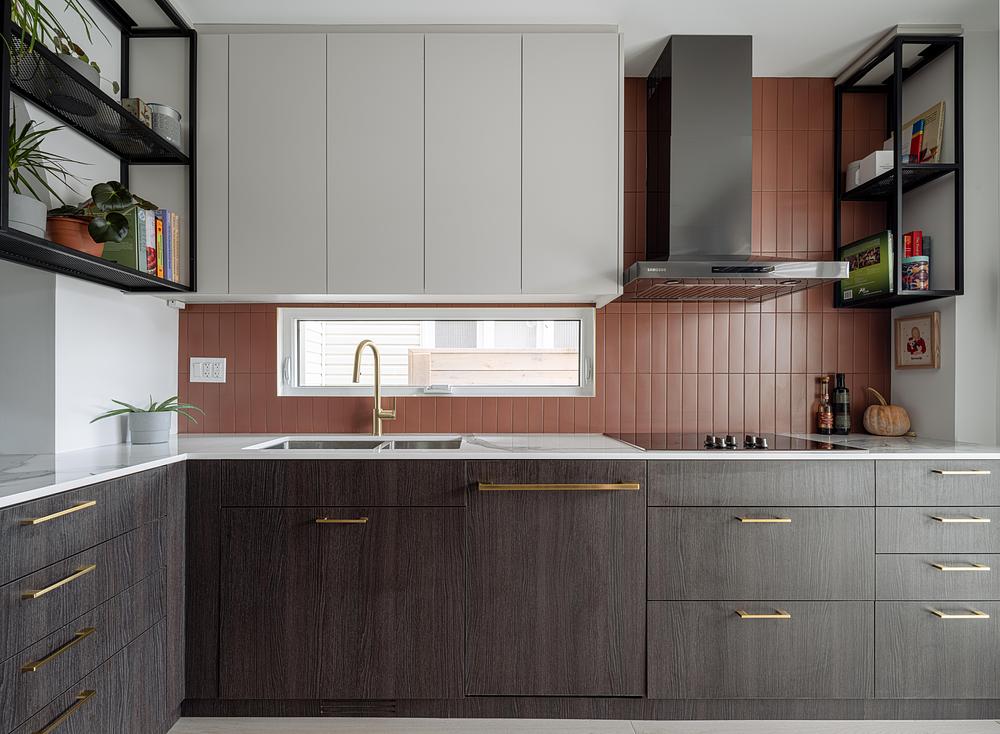
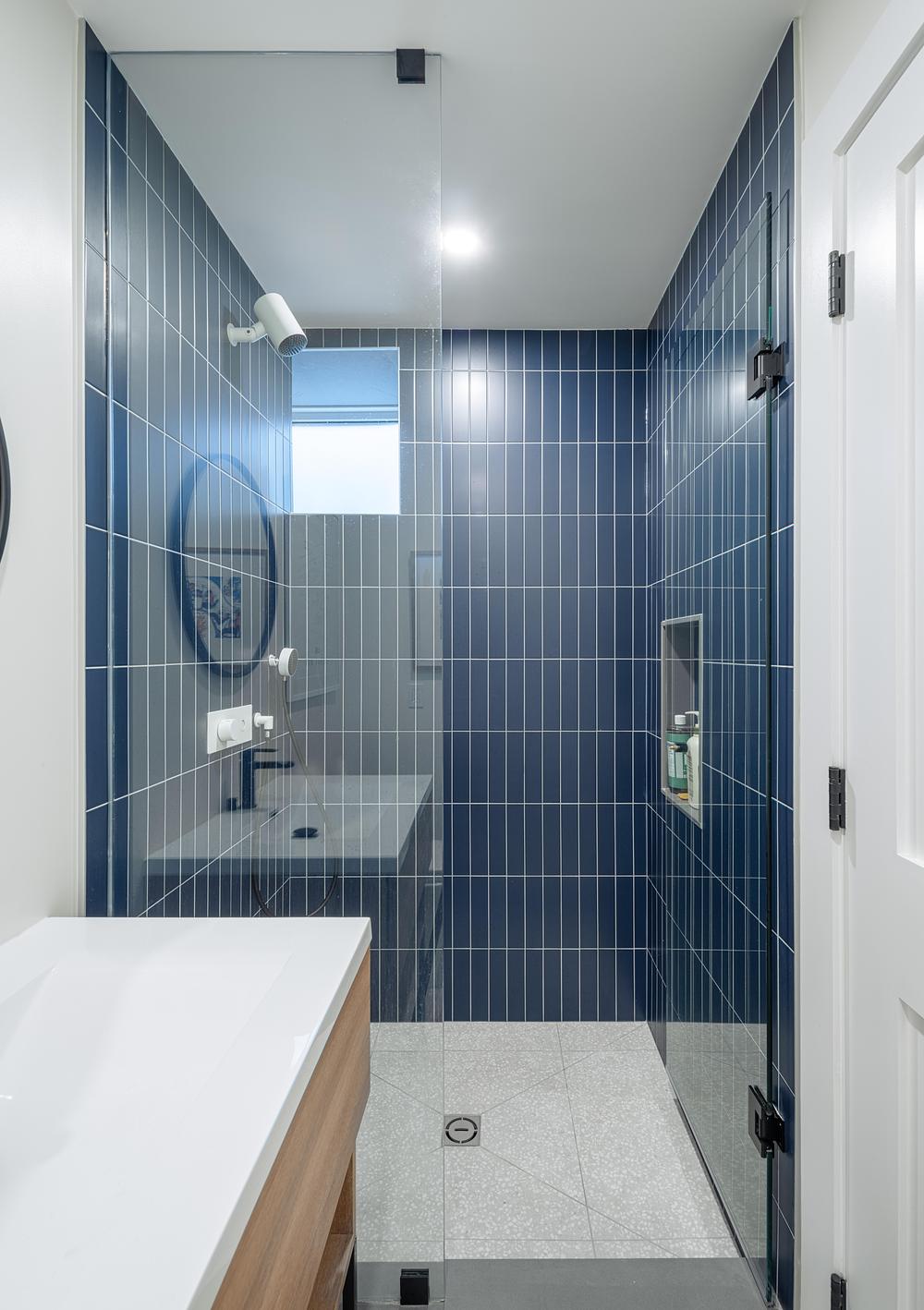
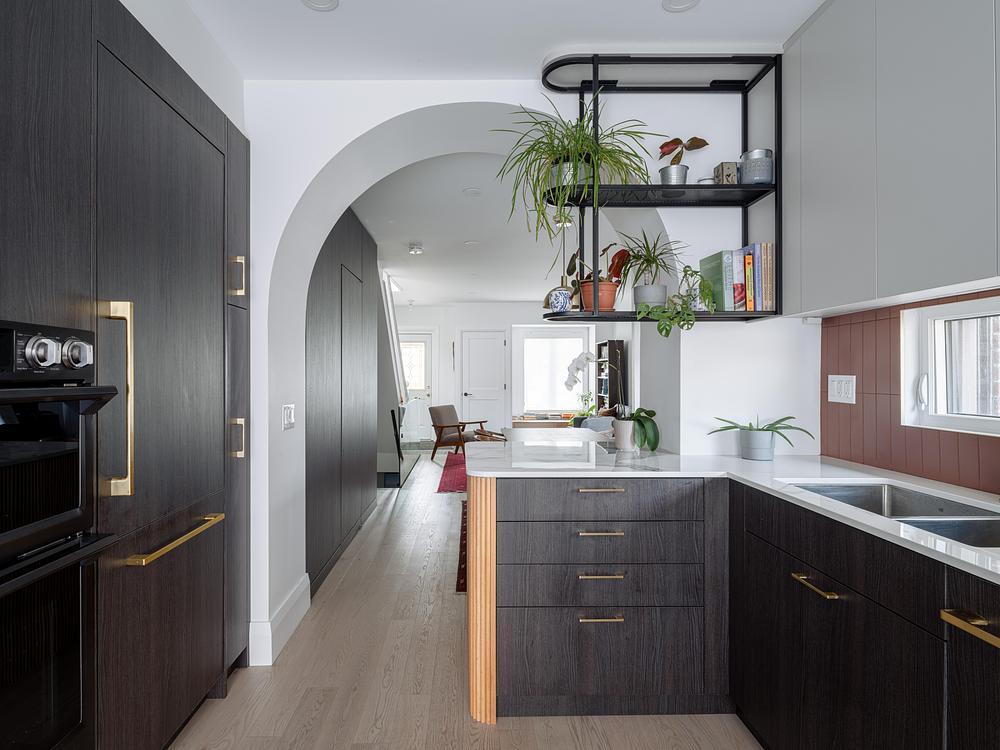
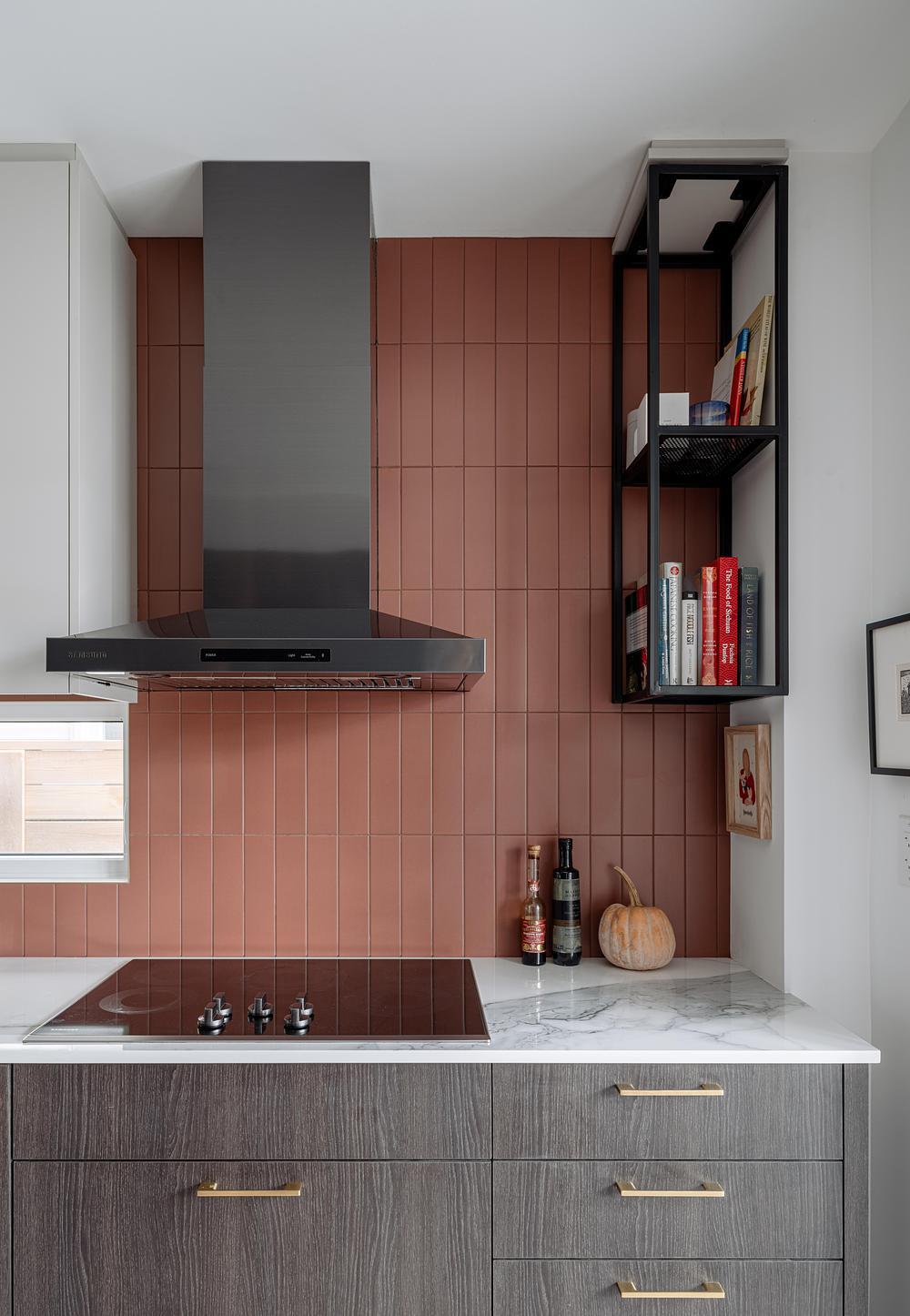
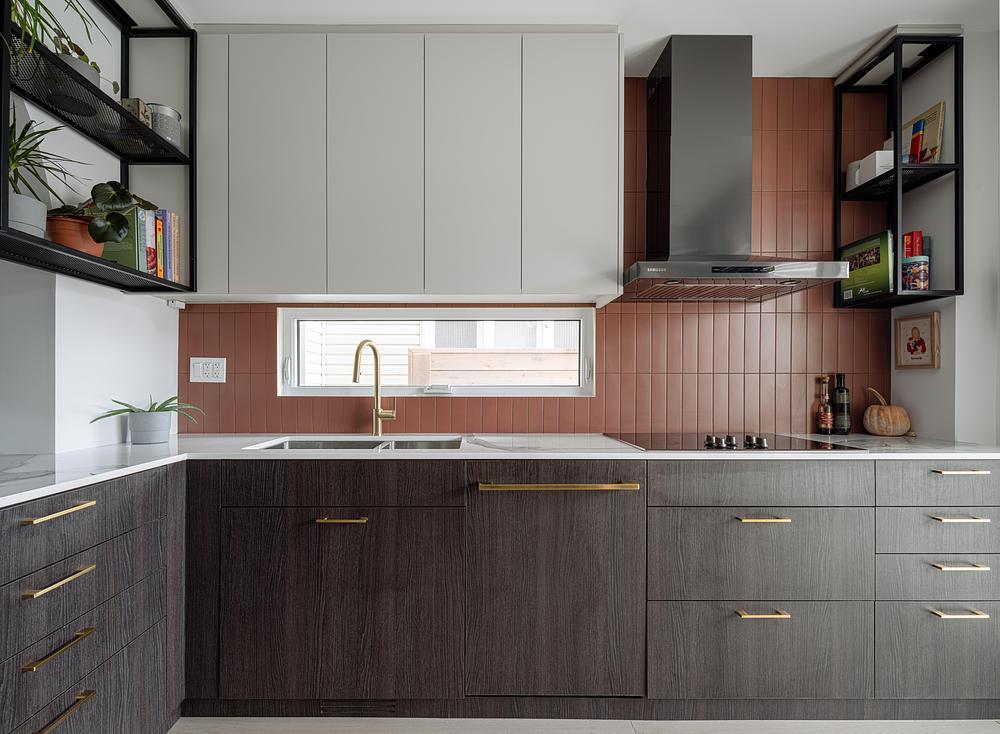
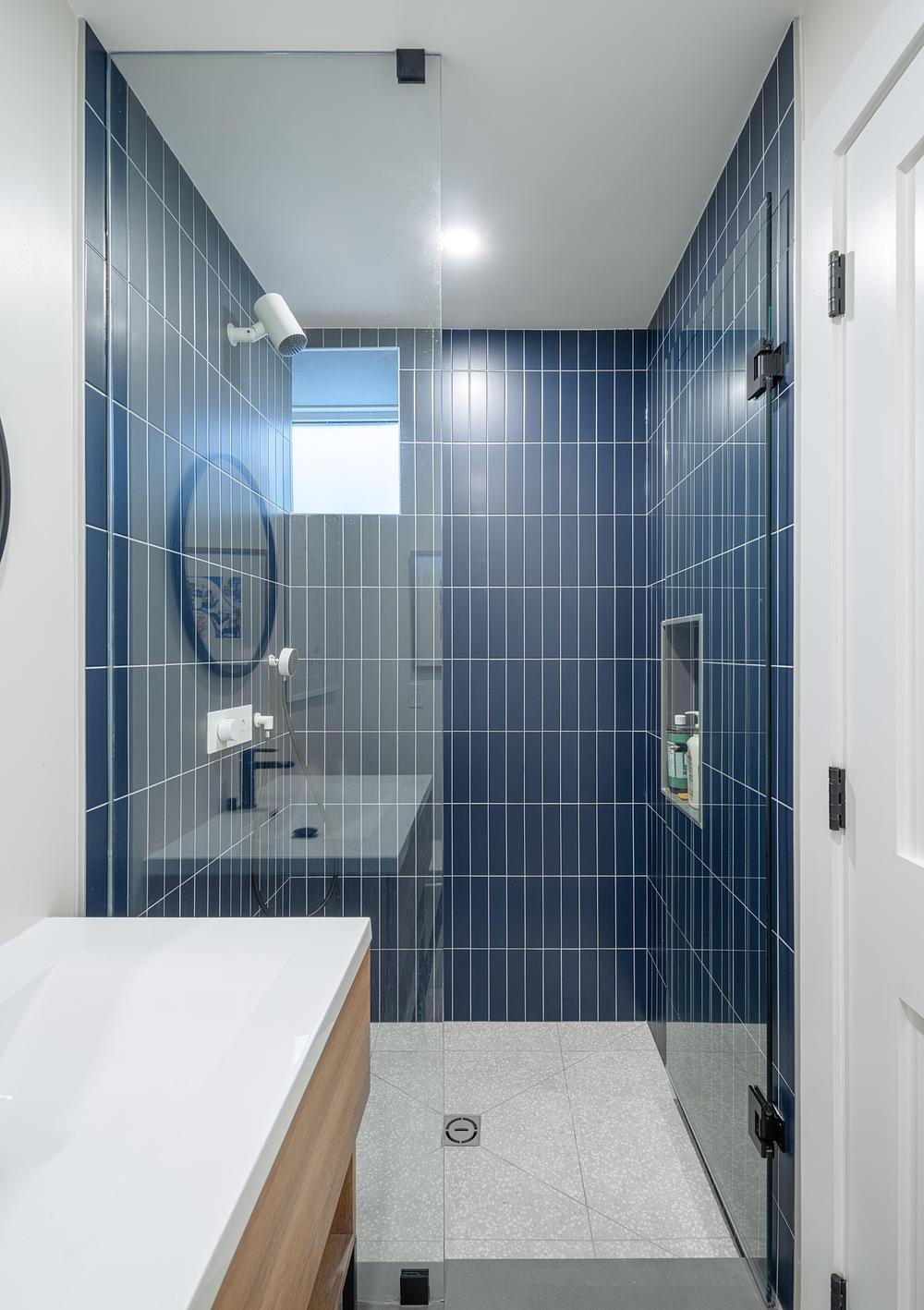
A series of contrasting transition areas introduce intense blocks of color including deep blue and teal tiles in the bathrooms and earthy terracotta in the kitchen. Framed vistas create continuity between spaces in the home, and fully exploited natural lighting, including the addition of a skylight on the second-floor hallway, adds an airy spaciousness to a formerly cramped home.
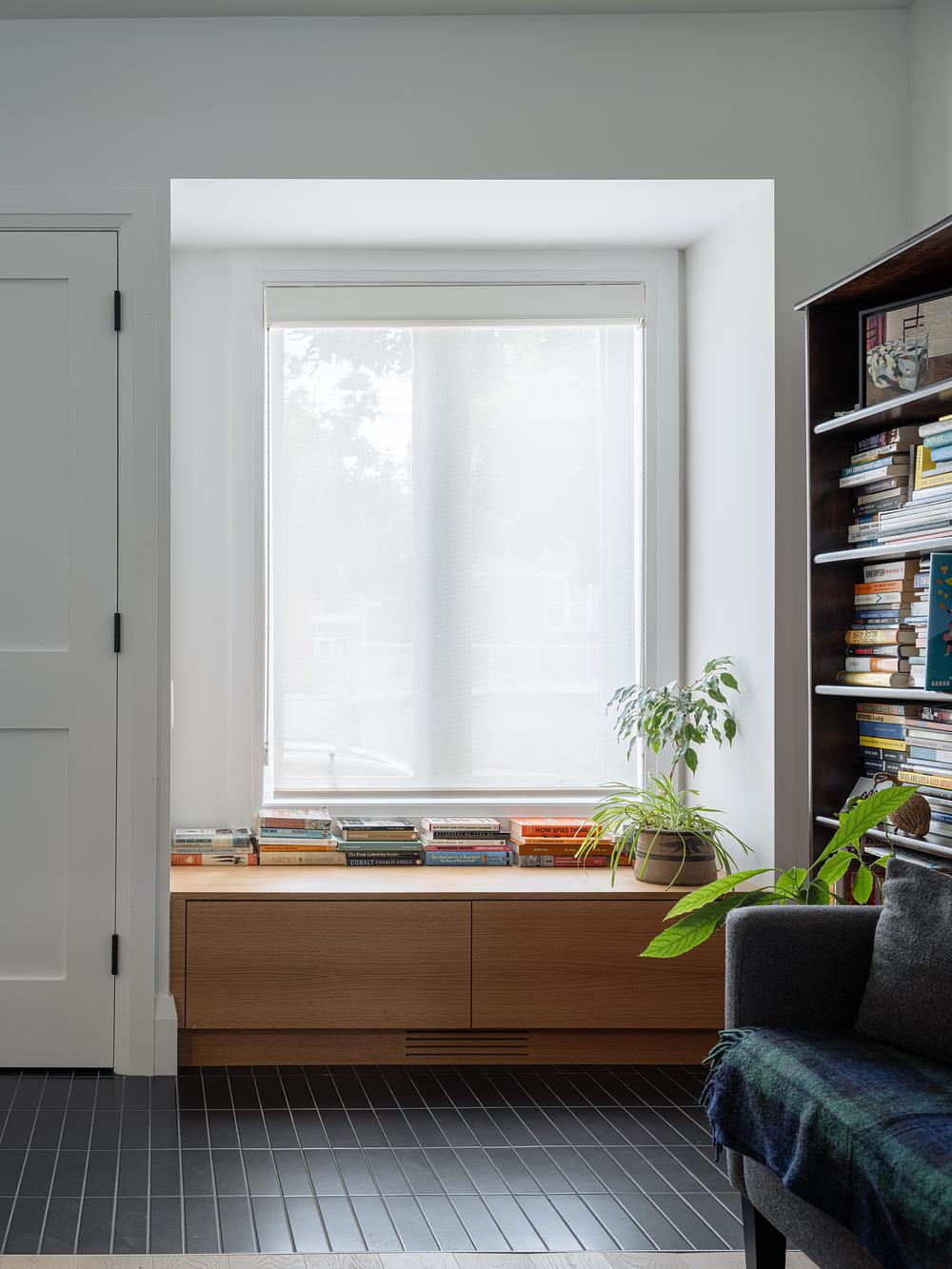
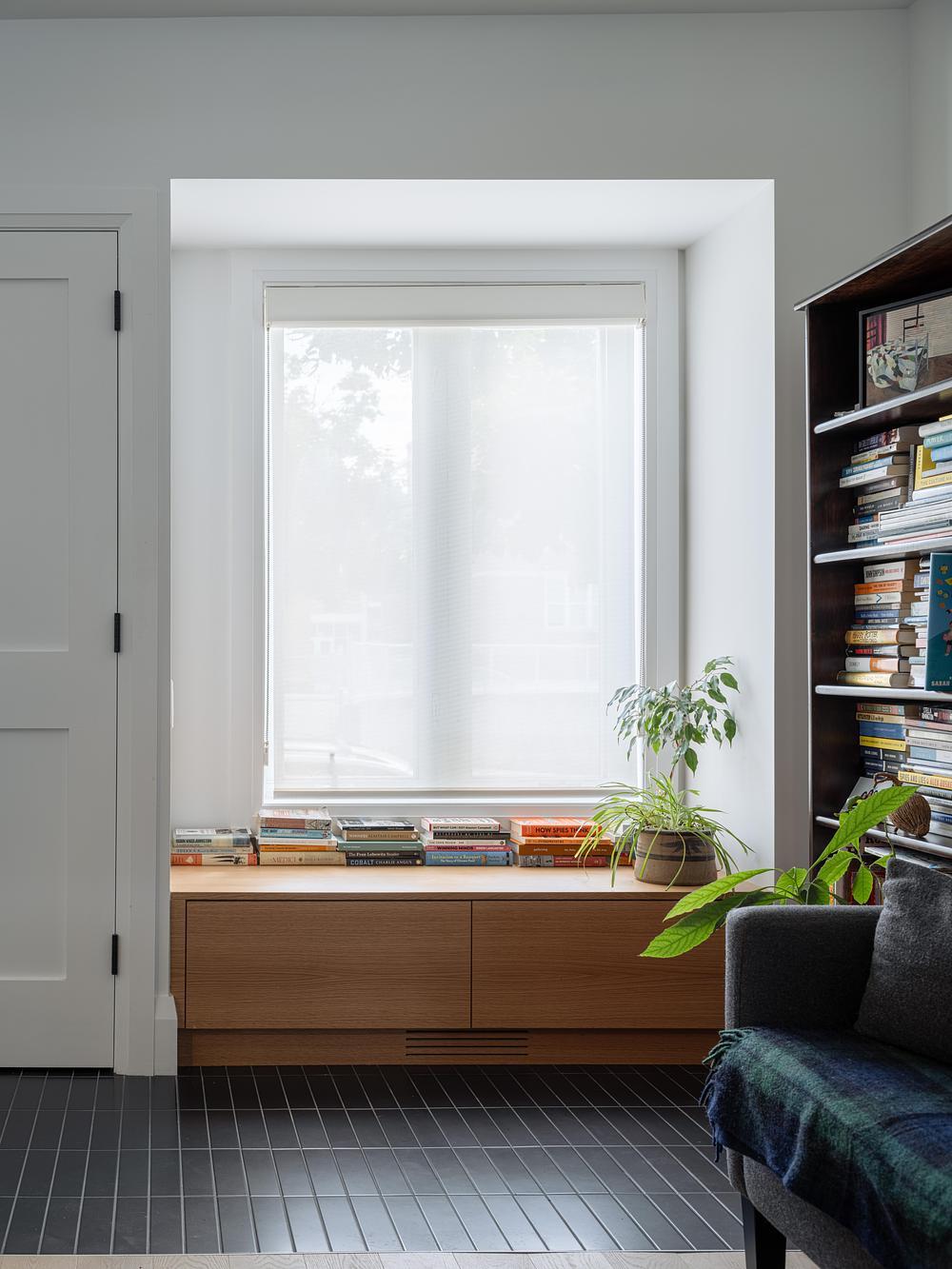
The previously small entrance area is now expanded into a five-foot-deep vestibule zone that spans the width of the house, demarcated by a dark-hued tile floor. Wide-plank, muted white oak flooring in the living area creates a sharp dark-to-light contrast moving from the vestibule to the living space.
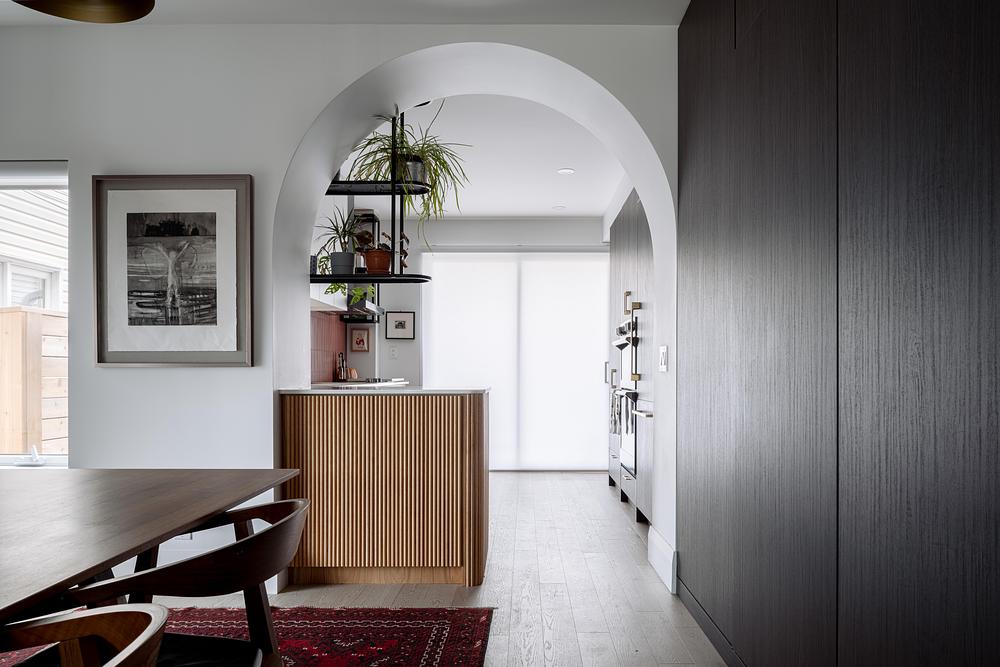
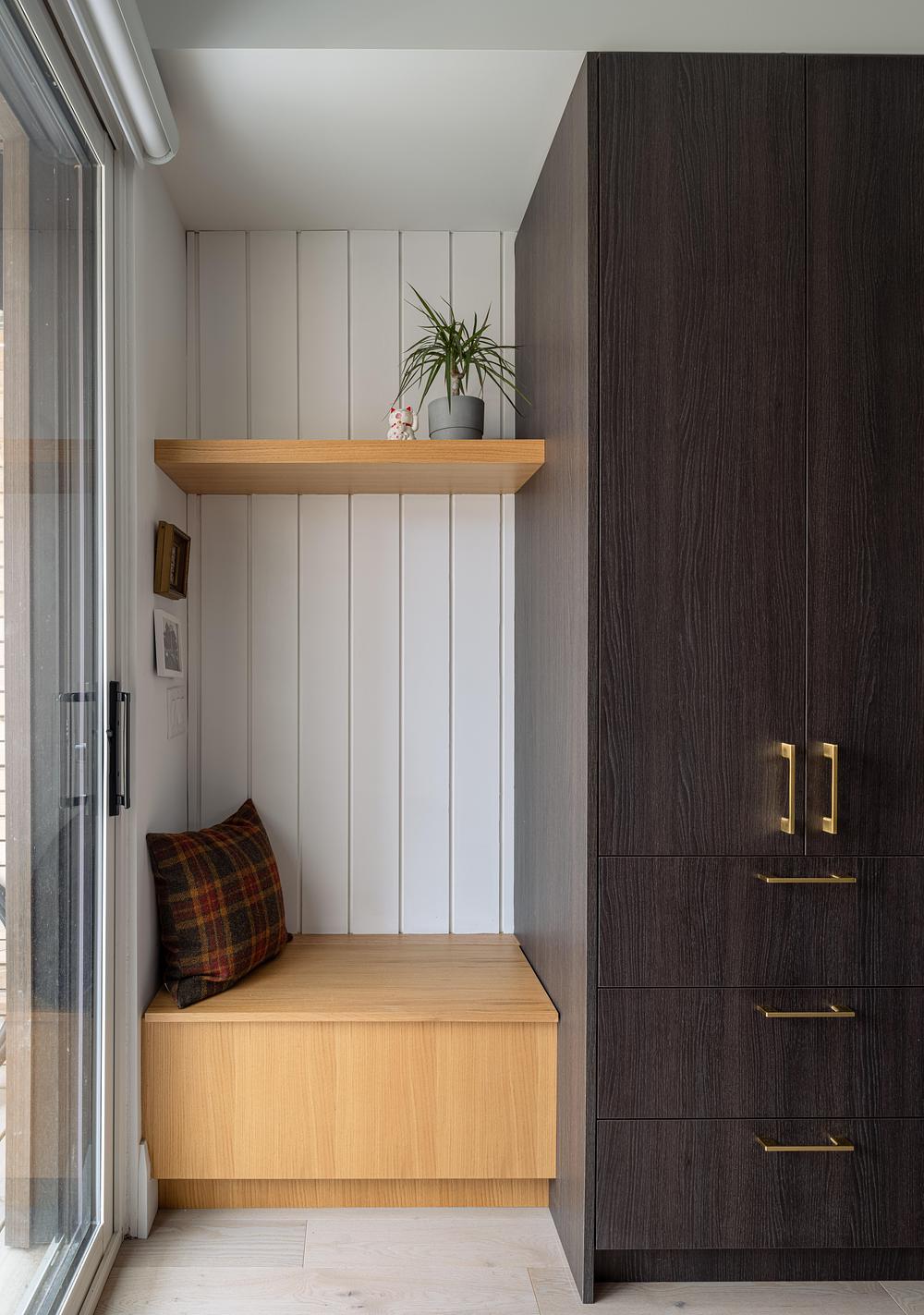
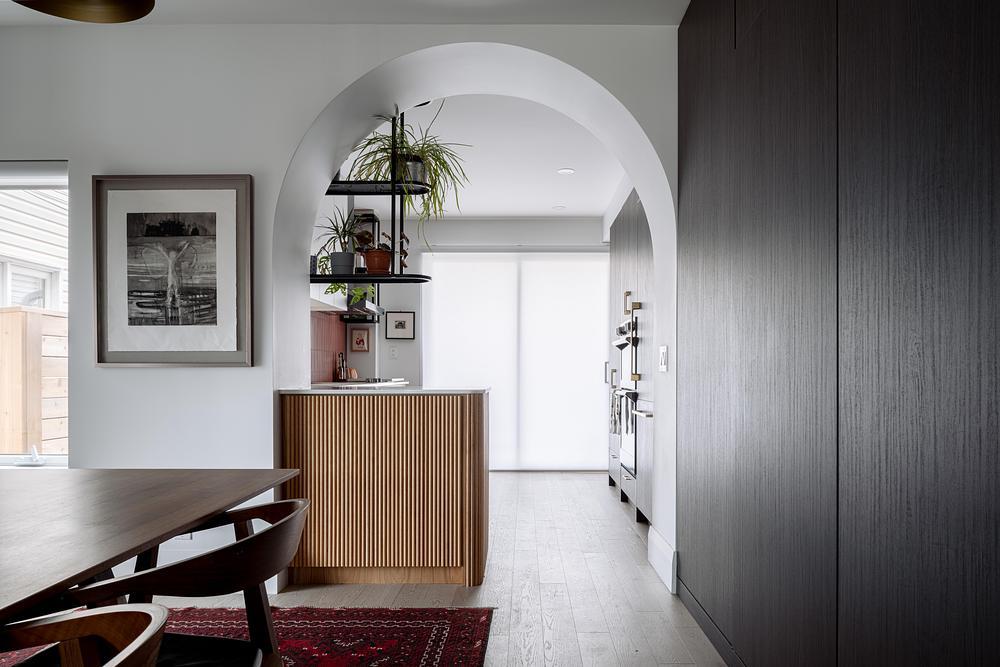
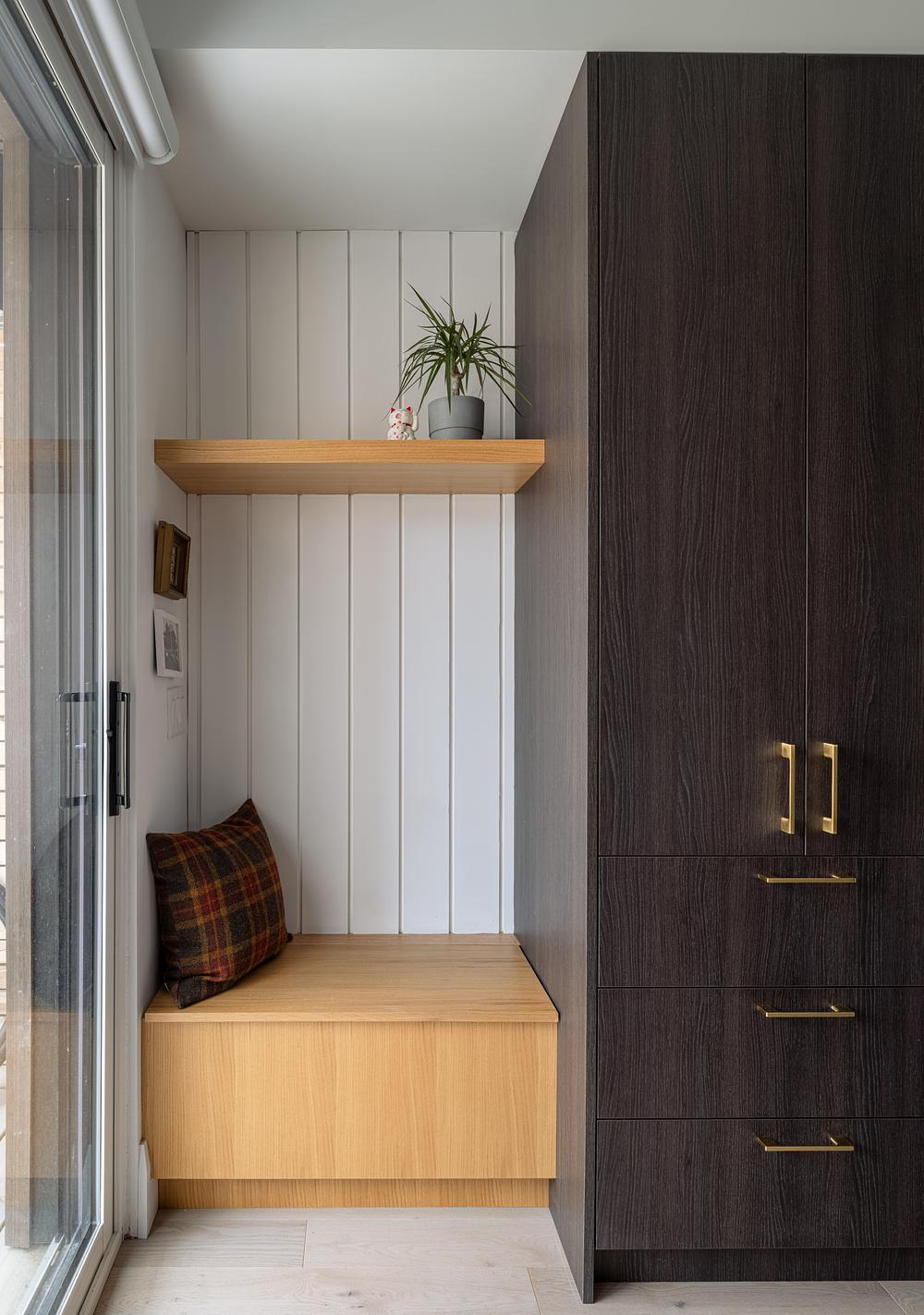
A long wall feature in thermo-fused woodgrain laminate, nicknamed the Black Strip, acts as a functional and unifying element between living area and kitchen, main house and rebuilt rear addition. Near the front of the house, the Black Strip conceals a powder room with hidden hardware and flush paneling, before segueing into seamless tall cabinets, a built-in fridge, and a wall oven in the kitchen.
The strip terminates in a white oak bench adjacent to glazed doors leading out to the back patio. A black, perforated metal, open shelving unit playfully peeks beyond the large arched frame of the kitchen entrance, mirrored by a peninsula beneath it, as viewed from the living area. This peninsula is topped by a crisp, bright porcelain slab that completes the kitchen countertop. The base of the peninsula facing the living area is wrapped in a solid white oak, half-round tambour, adding an intriguing graphical texture for a visual pause before entering the kitchen. A slim strip of window acts as a linear block of light nestled between matte grey laminate overhead cabinets and the sink.
The previously unfinished basement is now eighteen inches taller and houses a guest bedroom, bathroom, laundry closet, utility room, storage closet, and recreation room. The entire refinished basement is heated with an energy-efficient in-floor hydronic heating system.
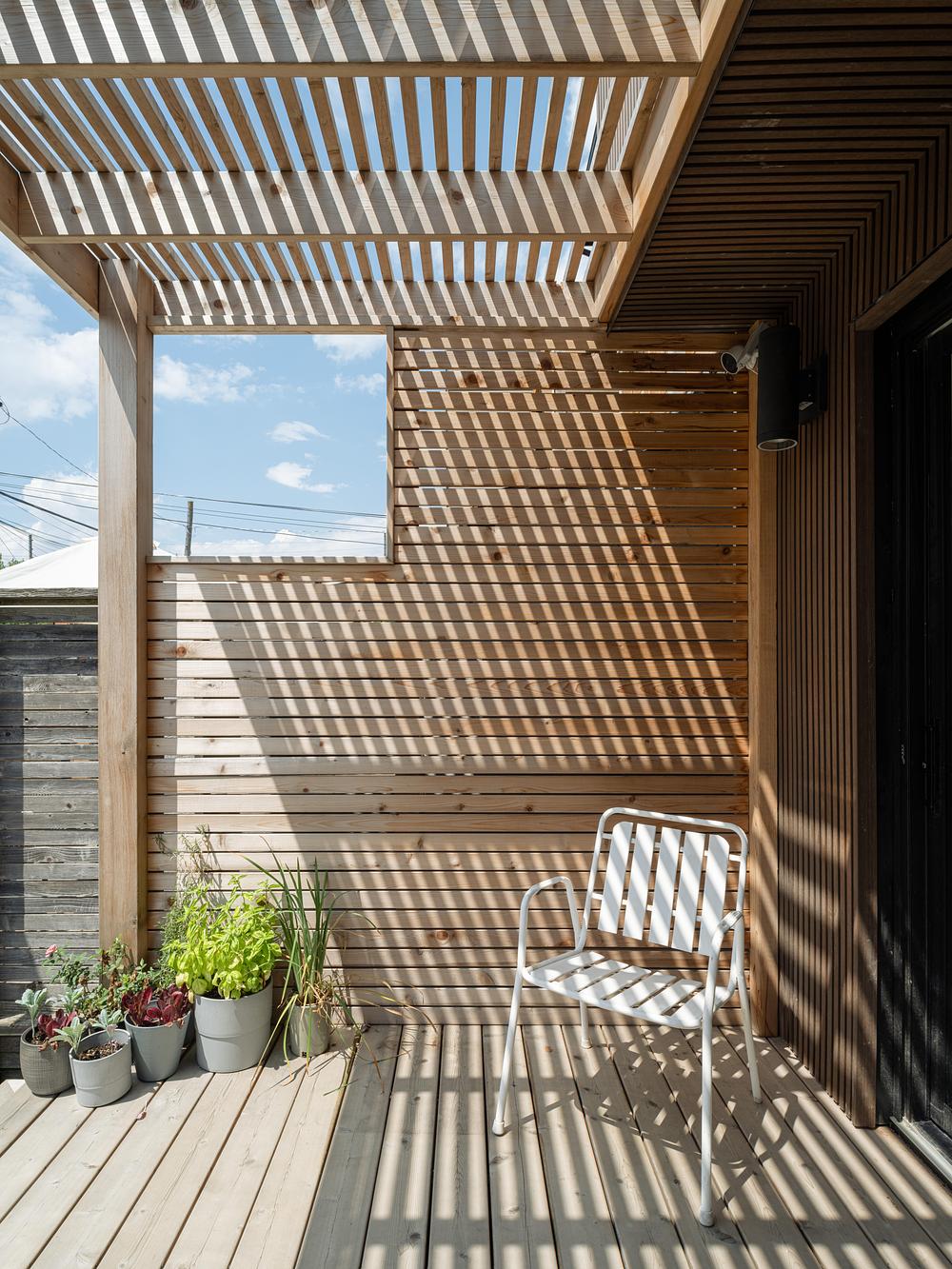
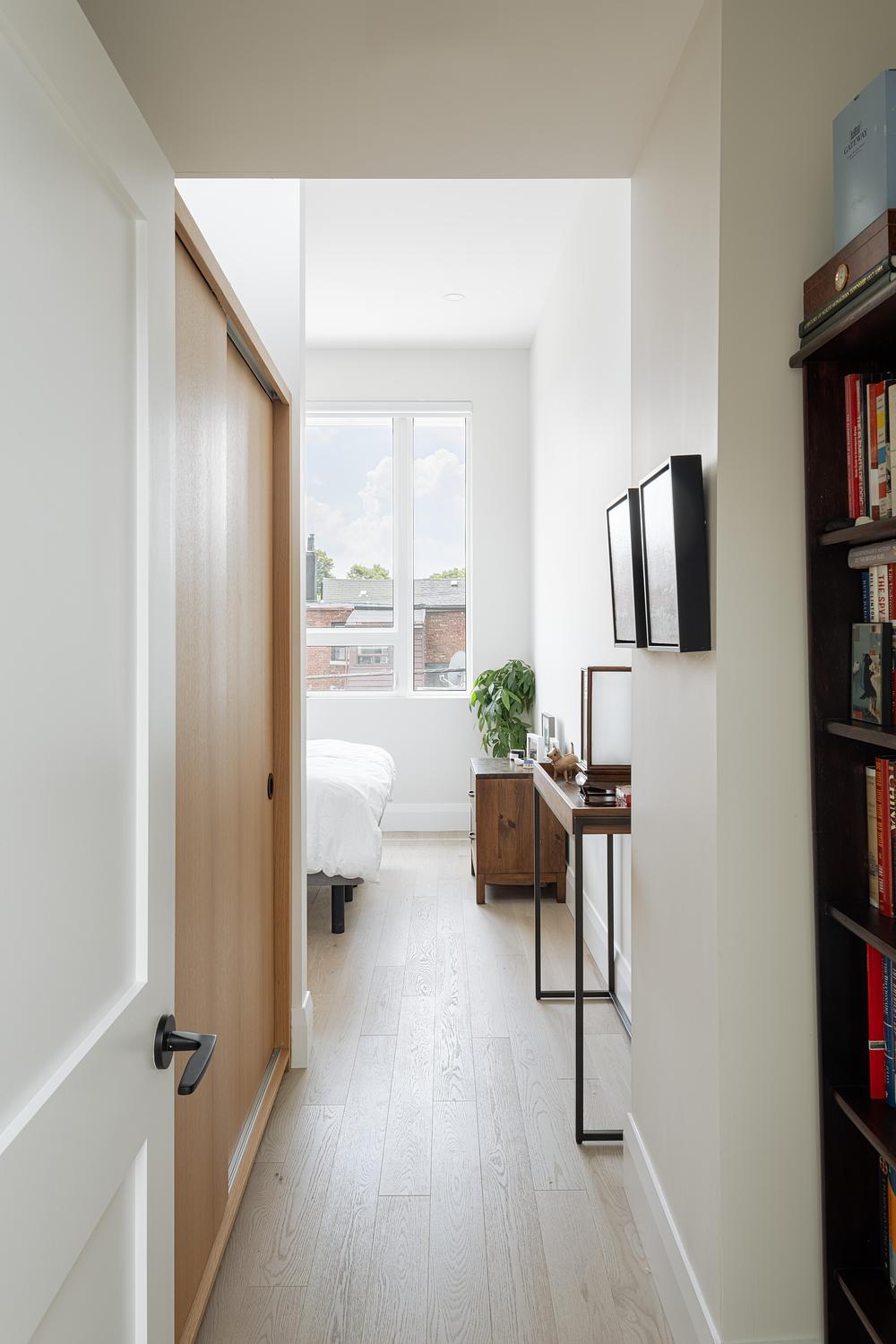
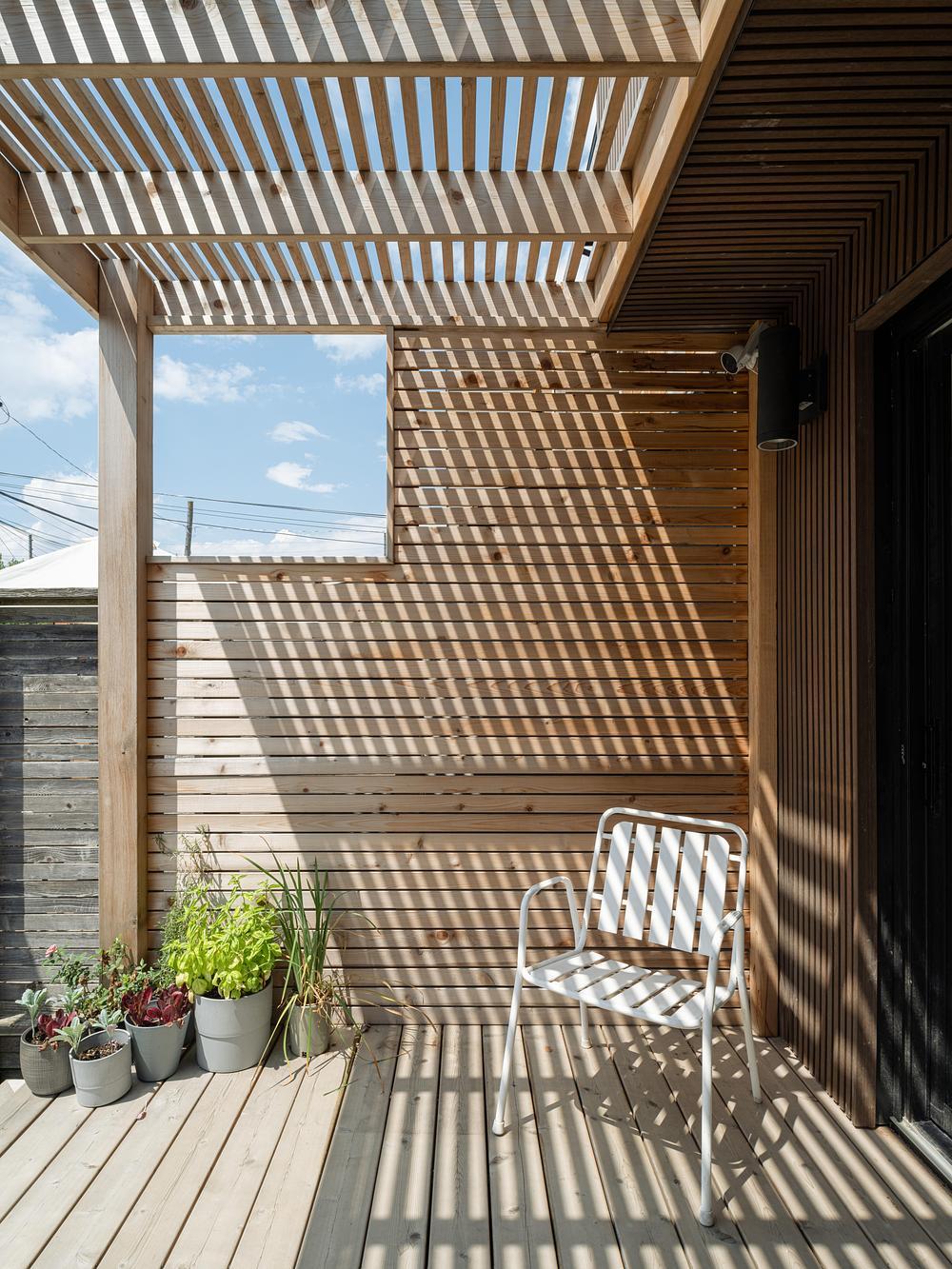
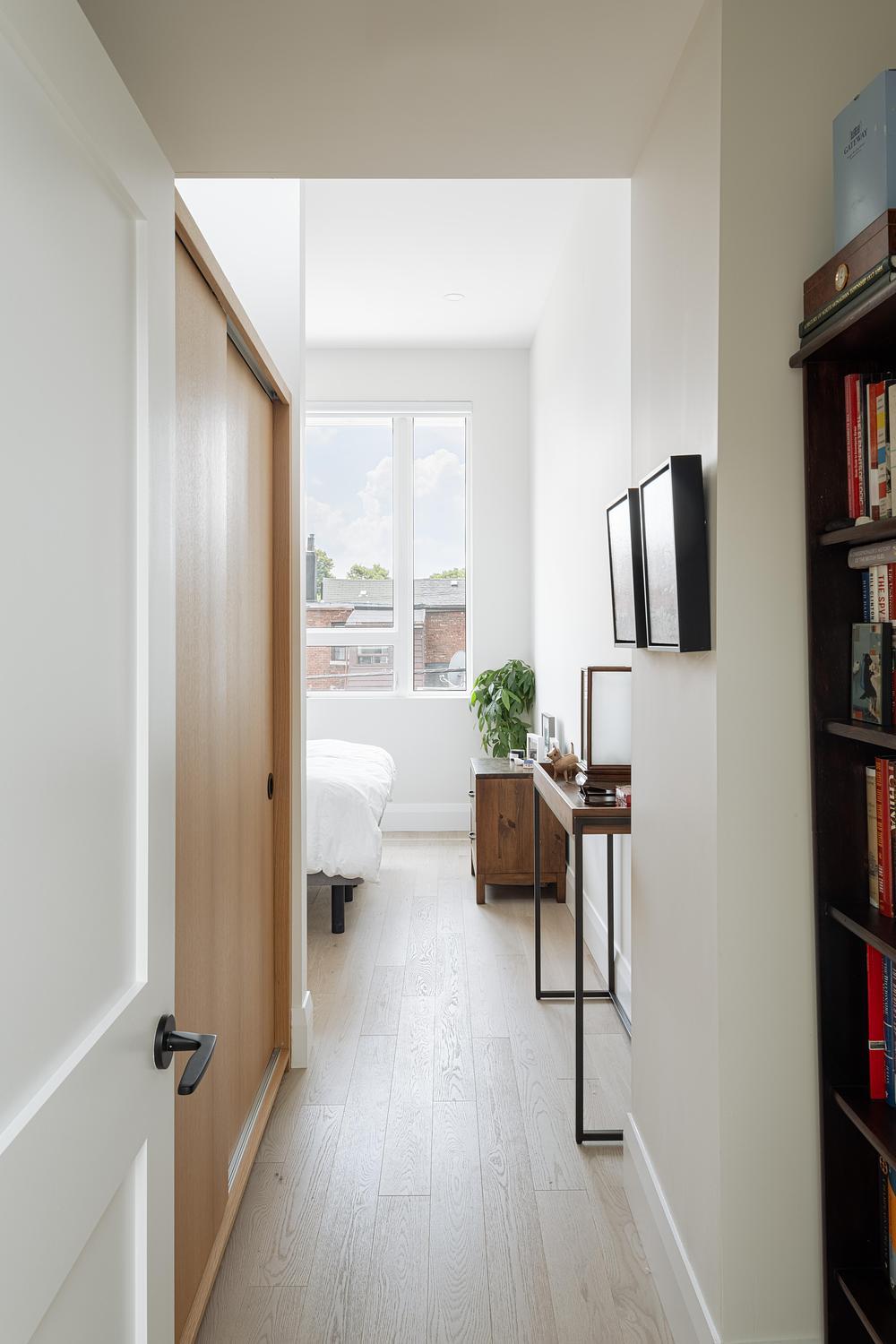
An extra floor above the rebuilt rear addition gathers additional natural light, and a lofty master bedroom with ten-foot ceilings features a Zen-inspired ensuite bath. The bedroom’s west-facing window is capped on the exterior by a brise-soleil with louvres arranged to block high-angle summer sun and reduce heat gain and glare, while in winter, low-angle sun warms the façade with passive solar heat. Norwegian fluted vertical siding in a recycled composite of Brazilian Ipe wood wraps around the addition’s exterior façade, adding a modern, castellated profile with a narrow shadow line.
Technical credits
- Architecture & Interior Design: Picnic Design
- Design Team: Eric Martin, Joanne Lam
- Structural: Ken Lundy
- Contractor: The English Carpenter













Have something to say? Share your thoughts with us in the comments below.