

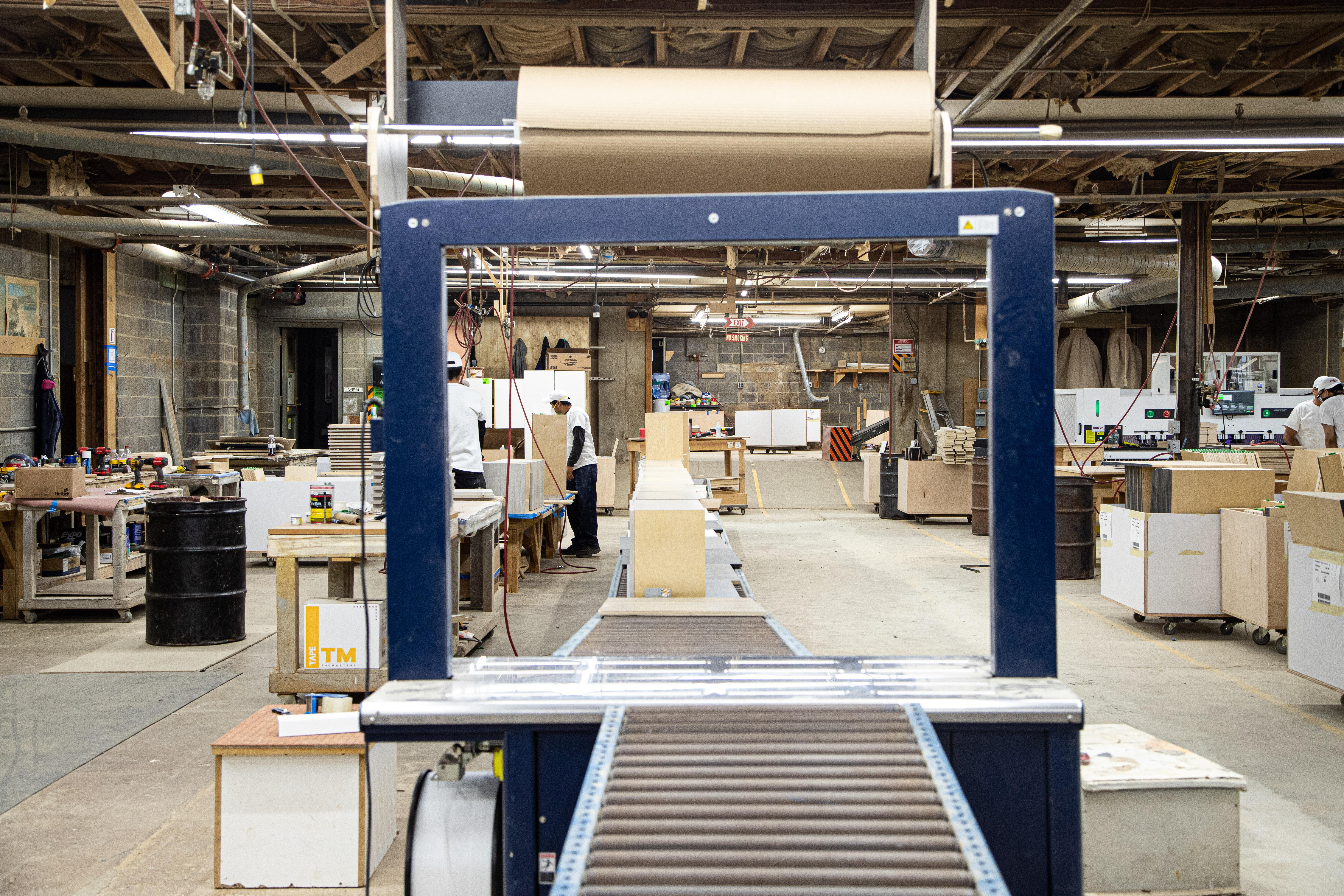
NEW YORK — For years, imported cabinetry became the default sourcing strategy across much of the multifamily industry. Lower overseas pricing, large-scale volume, and established supply channels pushed much of the market toward imported product.
Today, that conversation is beginning to change. American-made manufacturing is increasingly becoming a procurement, supply-chain, and project execution decision.
Across the woodworking and multifamily sectors, developers, contractors, purchasing groups, and suppliers are placing renewed attention on American-made manufacturing—not simply from a branding standpoint, but increasingly as a matter of supply-chain stability, predictability, procurement alignment, and execution.
Section 232 tariffs on imported cabinetry accelerated that shift, but tariffs are only part of a broader movement already underway. Freight volatility, international supply-chain instability, changing procurement expectations, and increasing emphasis on domestic sourcing are all contributing to renewed focus on American manufacturing capacity.
That shift is especially relevant within multifamily construction.
Cabinetry is deeply tied to project scheduling, sequencing, inspections, punch lists, occupancy timelines, and coordination across multiple trades. When delays occur—or when adjustments are required during production or installation—the consequences extend far beyond the cabinetry package itself. As a result, many developers and procurement teams are beginning to prioritize manufacturing partners capable of offering greater operational control.
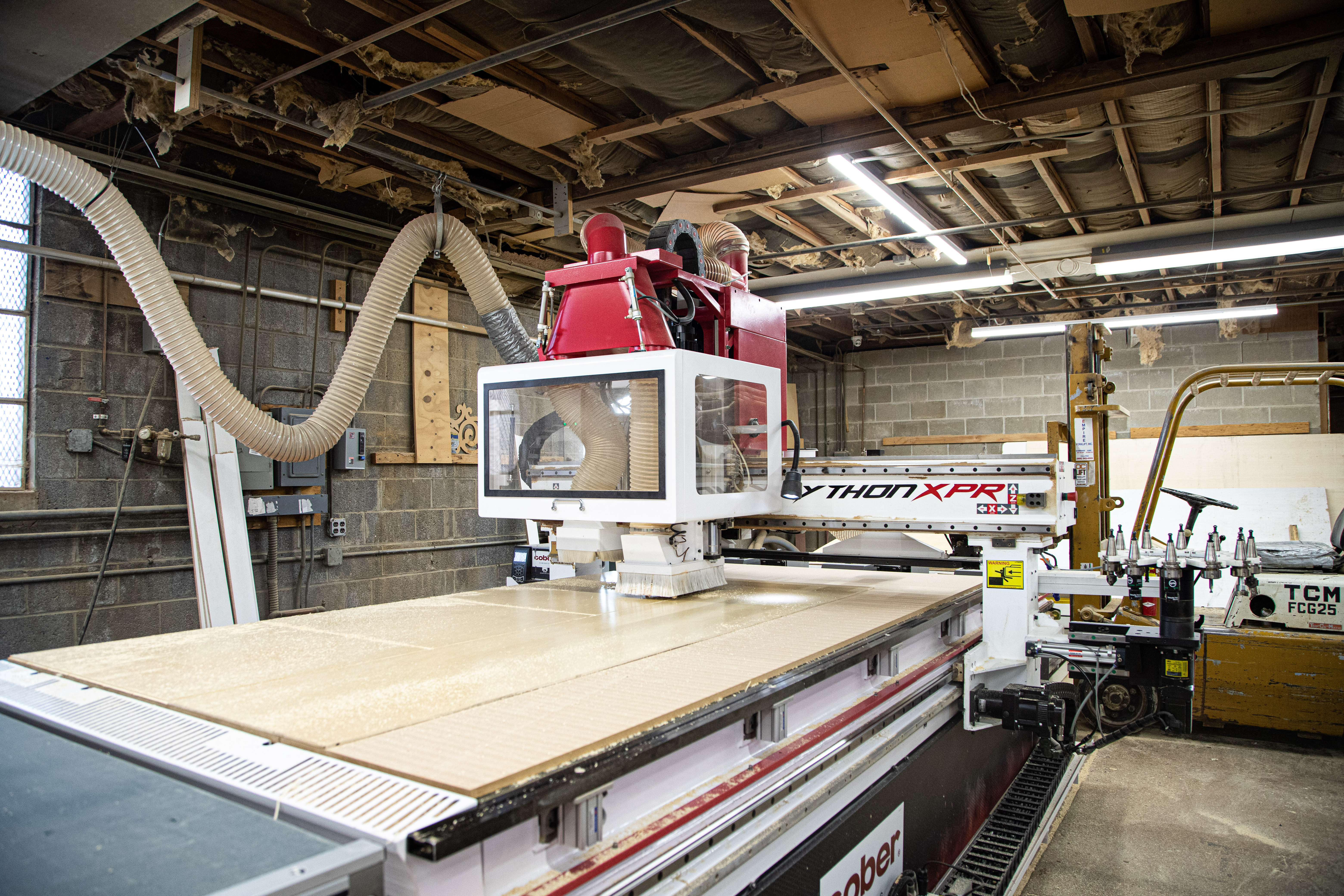
American-made manufacturing provides something increasingly valuable in today’s construction environment:
- Control over lead times.
- Control over communication.
- Control over production.
- Control over responsiveness when projects inevitably evolve.
At the same time, many large projects are also facing increasing pressure around domestic procurement alignment. Publicly funded projects, federally influenced developments, and projects navigating evolving Made in America sourcing expectations are placing greater emphasis on domestic manufacturing partners capable of supporting large-scale execution.
That does not mean projects are looking for boutique custom shops. In fact, one of the largest misconceptions in the market is that built-to-spec domestic manufacturing automatically means significantly higher pricing or limited production capacity.
Historically, many multifamily projects relied heavily on imported stock programs because they were perceived as the most cost-effective option. However, once freight exposure, tariffs, over-ordering, delays, damage, coordination costs, and schedule disruptions are factored into the true delivered cost of imported cabinetry, the pricing gap is often far narrower than expected. Built-to-spec domestic manufacturing is increasingly being evaluated not as a luxury alternative, but as a procurement strategy designed to reduce uncertainty while maintaining flexibility and scale.
Large-scale projects increasingly require manufacturing partners capable of delivering specification-driven cabinetry without sacrificing production volume, procurement efficiency, competitive pricing, or predictable execution. That shift is becoming more visible throughout the woodworking industry as questions around domestic capacity, operational reliability, procurement stability, and scalable American manufacturing move closer to the center of project planning discussions.
At Cober Cabinets, a New York-based, KCMA-certified manufacturer focused exclusively on large-scale multifamily projects, we’ve seen increasing interest from developers, contractors, dealers, and purchasing groups looking to reduce supply-chain exposure while maintaining scalable domestic production capability.
The companies best positioned moving forward may not simply be those offering the lowest initial number. They may be the ones capable of delivering real manufacturing accountability, built-to-spec flexibility, competitive execution, and dependable domestic production at multifamily scale.




Have something to say? Share your thoughts with us in the comments below.